MESSAGE FROM THE VICE-CHANCELLOR
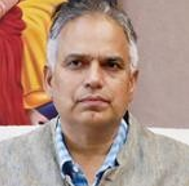
Vice Chancellor
Maharshi Dayanand University, Rohtak
Maharshi Dayanand University, Rohtak—an A+ grade NAAC-accredited institution—stands among India‘s premier centers for higher education. As Haryana‘s largest affiliating university, MDU fosters a dynamic academic network backed by a distinguished faculty and expanding departments. Established under the Ministry of Education’s PMMMNMTT initiative, our Faculty Development Centre (FDC) underscores our dedication to continuous professional growth, playing a vital role in elevating pedagogical expertise, research capacity, and academic leadership.
I am delighted to highlight the successful organization of the 8-Day Orientation and Sensitization Programme on the National Education Policy (NEP) 2020 (September 1- September 8, 2026) by the FDC under the UGC–Malaviya Mission Teacher Training Centre (MMTTC).
My heartiest commendations go to the Director, Deputy Director, Coordinators, and the entire team at UGC-MMTTC, MDU Rohtak, for designing and executing this progressive initiative. I am confident that the insights gained over these eight days will meaningfully advance the professional development and academic vision of all attendees while strengthening our shared commitment to socially impactful excellence.
MESSAGE FROM THE DEAN, ACADEMIC AFFAIRS
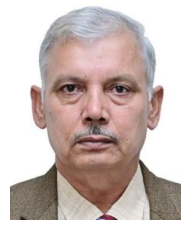
Maharshi Dayanand University,Rohtak
The Faculty Development Centre at Maharshi Dayanand University, Rohtak—a distinguished State University established under Haryana Act No. XXV of 1975, holding an A+ NAAC accreditation with a score of 3.44—was set up under the Pandit Madan Mohan Malaviya National Mission on Teachers and Teaching (PMMMNMTT), Ministry of Education, Government of India. The Centre is dedicated to addressing the evolving needs of higher education faculty, teacher educators, and researchers by equipping them with contemporary knowledge, modern pedagogical techniques, soft skills, and leadership capabilities essential for driving institutional performance and student engagement.
It is a privilege to extend my warm greetings to the organizers and participants of the 8-Day Orientation and Sensitization Programme on the National Education Policy (NEP) 2020, held from September 1- September 8, 2026, under the UGC-Malaviya Mission Teacher Training Programme (MMTTP). In today’s dynamic landscape, educators must act as agents of change to build equitable, inclusive, and sustainable communities. This programme provided a crucial platform to explore interdisciplinary frameworks, participatory research methods, and real-world community engagement. I am certain that these sessions have enriched the participants’ academic perspectives and renewed their commitment to educational excellence and societal progress. I offer my sincere congratulations to the Director, Deputy Director, and the entire FDC team for conceptualizing and delivering this impactful programme while upholding MDU‘s core mission and vision.
MESSAGE FROM THE REGISTRAR
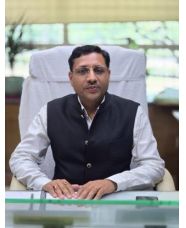
Maharshi Dayanand University,Rohtak
I extend my heartfelt greetings and warmest wishes to the organizers, resource persons, and participants of the 8-Day Orientation and Sensitization Programme on the National Education Policy (NEP) 2020, organized under the aegis of the UGC–Malaviya Mission Teacher Training Centre (MMTTC). Administrative and academic governance play a vital role in translating policy vision into actionable institutional practices. As higher education undergoes a structural shift towards multidisciplinary
learning, flexibility, and technological integration, programmes like this provide an indispensable framework for building institutional capacity and administrative alignment.
I commend the Faculty Development Centre and the entire administrative and academic team at MDU Rohtak for their meticulous planning and flawless execution in organizing this timely initiative. Their efforts in bringing together distinguished experts and dedicated participants reflect our university‘s unwavering commitment to excellence in governance, teaching, and research.
I am confident that the deliberations and insights gained over these eight days will empower faculty members to spearhead NEP reforms within their respective institutions. I wish the programme complete success and hope it inspires continued academic leadership and administrative innovation.
MESSAGE FROM THE DIRECTOR, FACULTY DEVELOPMENT CENTRE
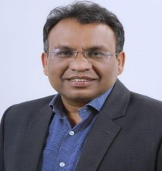
Maharshi Dayanand University,Rohtak
It gives me immense pleasure to extend my warm greetings on the successful organization of the 8 Days Orientation and Sensitization Programme on the National Education Policy (NEP) 2020 from September 1- September 8, 2026. The Faculty Development Centre (FDC) at Maharshi Dayanand University, established under the Pandit Madan Mohan Malaviya National Mission on Teachers and Teaching (PMMMNMTT), is dedicated to enriching the professional journey of educators and researchers in higher education. With a vision to strengthen teaching and research
practices, our Centre focuses on four key areas of faculty development: personal, professional, instructional, and organizational.
I extend my heartfelt thanks to the Hon‘ble Vice Chancellor, respected patrons, distinguished resource people for their thoughtful contributions and academic guidance. I am equally grateful to the participants from across the country, whose energy, curiosity, and engagement enriched the learning experience. My heartfelt appreciation also goes to the entire organizing team of UGC- MMTTC, MDU Rohtak, including the Deputy Director, course coordinators, and support staff, for their tireless efforts and commitment.
Let us carry forward the spirit of this programme and continue our journey toward academic excellence that serves the greater good of society.
MESSAGE FROM DEPUTY DIRECTOR & PROJECT COORDINATOR
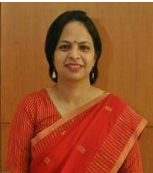
UGC-MMTTC,Maharshi Dayanand University, Rohtak
The Faculty Development Centre (FDC) at Maharshi Dayanand University, Rohtak, was established with the approval and funding of the Pandit Madan Mohan Malaviya National Mission on Teachers and Teaching (PMMMNMTT), Ministry of Human Resource Development (now Ministry of Education),Government of India. Since its inception in October 2018, the Centre has been committed to enhancing the academic and professional capabilities of faculty members across the country. The scope of programmes conducted by the Centre has been both vast and diverse, ranging from two-day seminars to one-month Faculty Induction Programmes.
Over the years, we have addressed a wide array of themes including High-Impact Teaching Strategies, Pedagogy, E- Learning Technologies, MOOCs, Soft Skills, Academic Writing, Research Methodology, Statistical Analysis, Curriculum Development, and more—each tailored to meet the dynamic and evolving needs of educators in higher education.
I welcomed all participants to the 8 Days Orientation and Sensitization Programme on the National Education Policy (NEP) 2020 from September 1- September 8, 2026. I sincerely thanks to our worthy Vice Chancellor, Director UGC-MMTTC at MDU- Rohtak Prof. Munish Garg for constant guidance, inspiration and administrative support. I thank resource persons for their expert guidance, the organizing team for their tireless efforts, and the participants for their enthusiastic engagement and commitment throughout the programme.
MESSAGE FROM THE PRINCIPAL
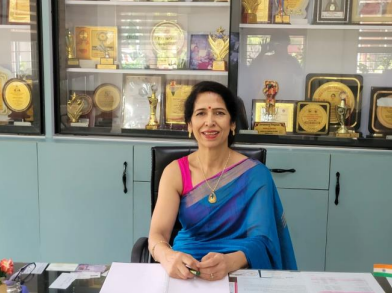
K.L. Mehta Dayanand College for Women, Faridabad
Dear Organising Team,
It gives me immense pleasure to extend my warmest greetings and best wishes to the entire team as you embark upon the 8-Day Orientation and Sensitization Programme on the National Education Policy (NEP) 2020.
This significant initiative reflects our collective commitment to understanding and advancing the transformative vision of NEP 2020, which seeks to make higher education more holistic, flexible, multidisciplinary, inclusive, innovative, and future-oriented.
The thoughtfully structured programme, covering key areas such as holistic and multidisciplinary education,Indian Knowledge Systems, academic leadership, research and innovation, skill development, inclusive education, and ICT-enabled teaching and learning, aptly reflects the fundamental principles and objectives of NEP 2020. The integration of distinguished resource persons, interactive pedagogical approaches, institutional reflections, and action-oriented sessions will provide participants with valuable insights while further strengthening our institutional capacity for effective and meaningful implementation of the Policy.
I sincerely appreciate and commend the entire organising team for their commitment, meticulous planning, seamless coordination, and dedicated efforts in creating a stimulating and academically enriching environment. Such initiatives play an important role in fostering collaboration, encouraging innovation, and promoting a deeper understanding of the changing landscape of higher education.
I am confident that this programme will empower educators and academic leaders with the knowledge,
perspectives, and practical approaches required to translate the vision of NEP 2020 into meaningful
educational practices, a vibrant research and innovation culture, and effective institutional governance. I
wish the entire team great success and a smooth and impactful execution of all the sessions. May this
initiative set a meaningful benchmark for academic excellence, continuous professional development, and
sustainable institutional growth.
With my very best wishes for the successful conduct of the programme.
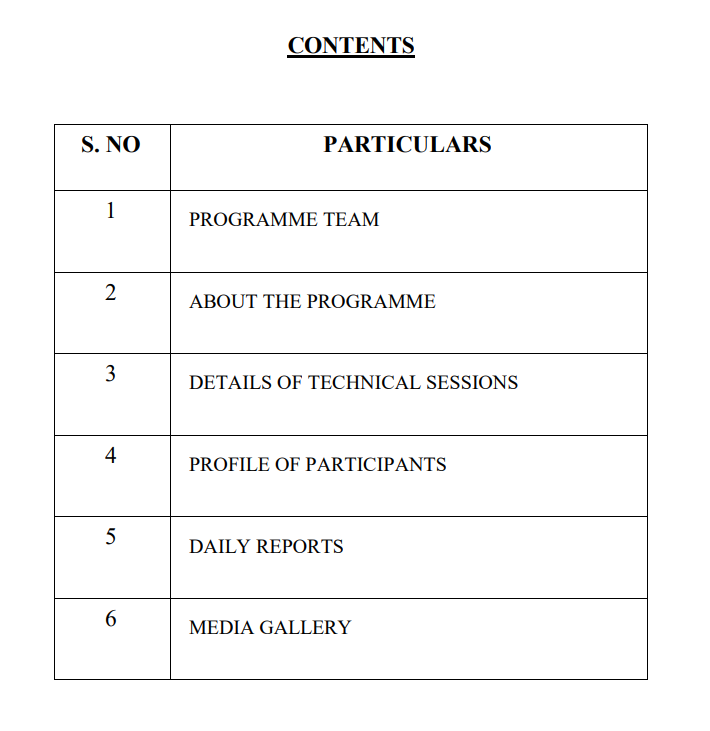
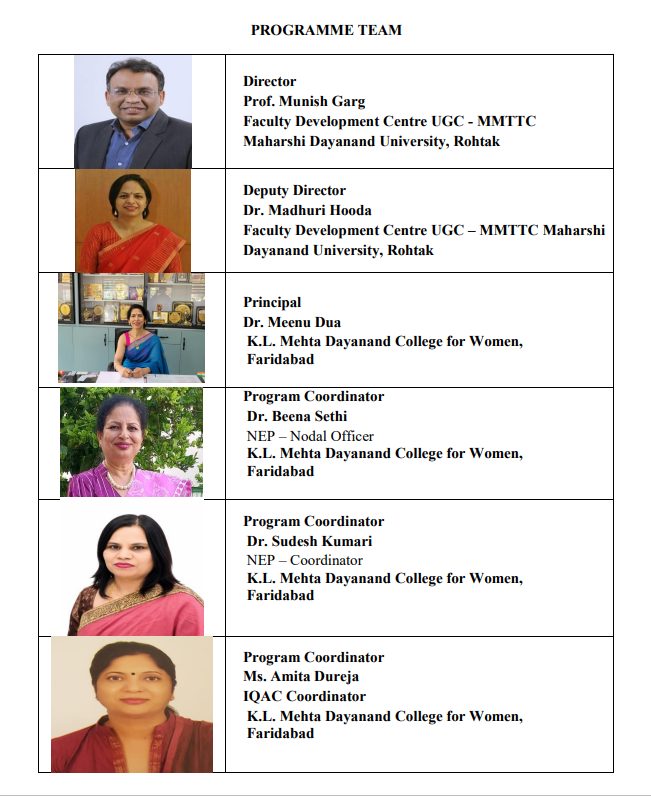
About the Programme
The National Education Policy (NEP) 2020 envisions a paradigm shift in India‘s education system to make it more holistic, flexible, multidisciplinary, inclusive, and aligned with the needs of the 21st century. The policy emphasizes fostering creativity, innovation, critical thinking, and ethical values among learners while ensuring equity and quality in education. For effective implementation of NEP 2020, it is essential that faculty members, academic leaders, and administrators understand its guiding philosophy, strategic priorities, and action framework. This 8-day Orientation and Sensitization Programme is designed to build awareness, develop leadership capacity, and enable academic institutions to integrate NEP principles into their teaching, research, and governance systems.
Objectives
- To sensitize participants to the vision, mission and transformative features of NEP 2020.
- To promote understanding of holistic and multidisciplinary education in higher education.
- To explore the integration of Indian Knowledge Systems (IKS) and multilingualism in
- contemporary academia.
- To strengthen academic leadership, governance and management in the context of NEP
- reforms.
- To highlight the role of higher education in research, innovation, and societal development.
- To emphasize skill development for employability, entrepreneurship, and lifelong learning.
- To enhance awareness of student diversity and inclusive education.
- To build digital competence and encourage the effective use of Information and Communication Technology (ICT) in education and institutional management.
Expected Outcomes
Participants will be able to:
- Understand the comprehensive framework and priorities of NEP 2020.
- Redesign curricula to promote holistic, multidisciplinary, and inclusive education.
- Integrate IKS, multilingualism, and digital tools into teaching and research.
- Strengthen institutional governance, leadership, and research capacity.
- Formulate strategies for skill development and societal engagement.
Details of the Programme
| Time | Program |
| 01:30 pm to 01:40 pm | Arrival/Joining of the Guests and Dignitaries |
| 01:40 pm to 01:43 pm | About the MMTTC, Dr. Madhuri Hooda, Dy. Director & Project Coordinator |
| 01:43 pm to 01:46 pm | Dr. Meenu Dua, Principal, K.L. Mehta Dayanand College For Women, Faridabad |
| 01:46 pm to 01:56 pm | Address by Prof. Milap Punia, Vice Chancellor, Maharshi Dayanand University, Rohtak |
| 01:56 pm to 02:00 pm | Welcome address by Prof. Munish Garg, Director, FDC |
TECHNICAL SESSIONS
Two Technical Sessions from 01.09.2026 to 08.09.2026
| Technical Session-I | 2:00 PM to 03:30 PM |
| Technical Session-II | 03:30 PM to 05:00 PM |
Technical Sessions and Resource Persons from 01.09.2026 to 08.09.2026
| Day 1 1st September 2026 | Session -I & II | Prof. Dipendra Nath Das (Pro VC-2), JNU CSRD/SSS/JNU New Delhi Topic: Addressing the Issues and Challenges for Nation Building in the New Millennium: Perspectives of National Education Policy 2020 (NEP 2020) 2020 (NEP 2020) |
| Day 2 2nd September 2026 | Session -I & II | Prof. S. P. Malhotra Kurukshetra University, Kurukshetra Topic: Holistic and Multidisciplinary Education |
| Day 3 3rd September 2026 | Session -I & II | Prof. Sudesh Yadav School of Environment Sciences, JNU New Delhi Topic: Academic Leadership and Management |
| Day 4 4th September 2026 | Session-I & II | Dr. Girdhar Gopal S.D. College Ambala Topic: Indian Knowledge System |
| Day 5 5th September 2026 | Session-I & II | Prof. R.C Sharma Ambedkar University, Delhi Topic:- Use of ICT for Effecting Teaching & Topic:- ICT tools for Online Assessment |
| Day 6 6th September 2026 | Session-I & II | Prof. Arvind Mishra CSS/JNU New Delhi Topic: Handling Diversity and Creating Inclusive Classrooms & Topic: Academic Leadership and Management |
| Day 7 7th September 2026 | Session-I & II | Prof. K.K. Sharma Department of Microbiology M.D.U Rohtak Topic- Quality Publication and Research Grants, AI and Ethics & Topic- Impact of Multidisciplinary Research: In Publication & Research Grant |
| Day 8 8th September 2026 | Session-I Session-II | Prof. Dazy Zarabi Punjab University, Chandigarh Topic-Inclusive Education Prof. S.K. Gakhar Vice Chairperson Haryana State Higher Education Council Panchkula Topic: Higher Education and Society |
LIST OF PARTICIPANTS
| Roll | Saluation | Name | Designation | Department |
| 1 | Ms. | KOMAL GOYAL | Assistant Professor | Zoology |
| 2 | Ms. | VIDHI | Assistant Professor | Botany |
| 3 | Ms. | RENU PANDEY | Assistant Professor | Biotechnology |
| 4 | Ms. | JYOTI KUSHWAH | Assistant Professor | Mathematics |
| 5 | Ms. | SHRISHTI SINGH | Assistant Professor | English |
| 6 | Dr. | NUPUR SRIVASTAVA | Assistant Professor | Mathematics |
| 7 | Mrs. | KIRAN KHATANA | Assistant Professor | Physical Education |
| 8 | Ms. | RANJANA | Assistant Professor | Chemistry |
| 9 | Dr. | MADHURIMA DUBEY | Assistant Professor | Political Science |
| 10 | Mrs. | POOJA KHATANA | Assistant Professor | Chemistry |
| 11 | Dr. | ANNU KALRA | Assistant Professor | Physical Sciences |
| 12 | Mrs. | KAVITA | Assistant Professor | Music |
| 13 | Ms. | RANI | Assistant Professor | Chemistry |
| 14 | Ms. | SONIA BISHT | Assistant Professor | Physical Science |
| 15 | Dr. | SHVETA ARYA | Assistant Professor | Zoology |
| 16 | Ms. | PAYAL | Assistant Professor | Zoology |
| 17 | Dr. | MAMTA SINGH | Assistant Professor | Zoology |
| 18 | Dr. | RACHNA POSWAL | Assistant Professor | Commerce |
| 19 | Dr. | REETI PANCHAL | Assistant Professor | Zoology |
| 20 | Dr. | POOJA TYAGI | Assistant Professor | Hindi |
| 21 | Dr. | PURNIMA VERMA | Assistant Professor | Science |
| 22 | Ms. | MANISHA | Assistant Professor | Chemistry |
| 23 | Mrs. | SUDHA DIWAKAR | Assistant Professor | Physical Science |
| 24 | Dr. | APARNA SHARMA | Assistant Professor | English |
| 25 | Mrs. | SAPNA SINGH | Assistant Professor | Botany |
| 26 | Dr. | PRIYA SAXENA | Assistant Professor | Hindi |
| 27 | Mrs. | KONIKA | Assistant Professor | Computer Science |
| 28 | Mrs | PRITI | Assistant Professor | Botany |
| 29 | Mrs | INDU RANI | Assistant Professor | Botany |
| 30 | Mrs | ANJALI | Assistant Professor | Hindi |
| 31 | Ms | CHANCHAL KUMARI | Assistant Professor | Computer Science |
| 32 | Ms. | SHWETA CHAUDHARY | Assistant Professor | Botany |
| 33 | Ms | NEHA | Assistant Professor | Botany |
| 34 | Dr. | REKHA GOEL | Assistant Professor | Commerce |
| 35 | Ms. | ANJANA | Assistant Professor | Music |
| 36 | Ms. | SAKSHI NAGAR | Assistant Professor | Political science |
| 37 | Dr. | MADHU RATHI | Assistant Professor | Economics |
| 38 | Ms. | DIKSHA KUMARI | Assistant Professor | Political science |
| 39 | Dr. | VANDANA | Assistant Professor | Mathematics |
| 40 | Ms. | LEENA BHATIA | Assistant Professor | Commerce and Management |
| 41 | Dr. | BABITA SINGH | Assistant Professor | Political science |
| 42 | Dr. | PREETI VIJAY | Assistant Professor | Commerce and Management |
| 43 | Dr. | KUNIKA ARORA | Assistant Professor | Commerce and Management |
| 44 | Dr. | VEENAPANI SINGH | Assistant Professor | Sociology |
| 45 | Dr. | SONAM YADAV | Assistant Professor | Commerce and Management |
| 46 | Ms. | DIKSHA CHAWLA | Assistant Professor | Economics |
| 47 | Dr. | GUNJAN ANEJA | Assistant Professor | Commerce and Management |
| 48 | Ms. | RENU KUMARI | Assistant Professor | Computer Science |
| 49 | Ms. | REENA | Assistant Professor | Computer Science |
| 50 | Dr. | MONIKA SINGLA | Assistant Professor | Commerce and Management |
| 51 | Ms. | NALNEE | Assistant Professor | Commerce and Management |
| 52 | Dr | RAKHI WADHAWAN | Assistant Professor | Computer Science |
| 53 | Ms. | RADHIKA GOYAL | Assistant Professor | Economics |
| 54 | Mrs. | MAMTA KUMARI | Assistant Professor | Commerce and Management |
| 55 | Dr. | MONIKA POSWAL | Assistant Professor | Commerce and Management |
| 56 | Ms. | NANCY | Assistant Professor | English |
| 57 | Ms. | SANYOGITA VERMA | Assistant Professor | Chemistry |
| 58 | Mr. | DHARM RAJ VERMA | Assistant Professor | Chemistry |
| 59 | Dr. | NISTHA THAKUR | Assistant Professor | Chemistry |
| 60 | Mrs. | ASHISH KUMARI | Assistant Professor | Chemistry |
| 61 | Ms. | ASTHA SHARMA | Assistant Professor | Chemistry |
| 62 | Ms. | VINITA YADAV | Assistant Professor | Commerce |
| 63 | Mrs. | VINEETA VERMA | Assistant Professor | History |
| 64 | Dr. | NEERU VERMA | Assistant Professor | Economics |
| 65 | Dr. | BABITA SHARMA | Assistant Professor | English |
| 66 | Dr. | MADHU SINGH | Assistant Professor | Arts |
| 67 | Ms. | RACHNA | Assistant Professor | Commerce |
| 68 | Dr. | SUDESH KUMARI | Assistant Professor | Commerce |
INAUGURAL SESSION
The inaugural session of the 8-day ‗Orientation and Sensitisation Programme on the National Education Policy (NEP-2020)‘, organized by the Faculty Development Centre (FDC), Malviya Mission Teacher Training Centre (MMTTC), Maharshi Dayanand University, Rohtak in collaboration with K.L. Mehta Dayanand College for Women , Faridabad commenced on September 1, 2026, with insightful deliberations by distinguished academicians.
In his welcome address, Prof. Munish Garg, Director, FDC-MMTTC, shared that the programme has attracted many participants across the country. These participants will benefit from the knowledge and experience of around 8 national acclaimed experts. Prof. Garg highlighted that this course aims to equip researchers with the advanced tools related to researchers and focus on writing Research proposals and grants.
Dr. Madhuri Hooda, Deputy Director, FDC and Project Coordinator, MMTTC, elaborated on the broader vision and objectives of the programme. She expressed gratitude to Prof. Milap Punia, Vice-Chancellor, MDU, for his visionary leadership, which has enabled the university to develop a robust culture of research initiatives.
Dr. Meenu Dua , Principal , K.L. Mehta Dayanand College for Women, Faridabad welcomed all the participants and formally inaugurated the NEP 2020 Orientation Programme. Dr. Beena Sethi NEP- Nodal Officer also welcomed everyone and briefly introduced the objectives of the NEP 2020 programme.
DAILY REPORTS
| Day 1: 01 September, 2026 (02:00 PM – 05:00 PM) |
| Session-I & Session-I I |
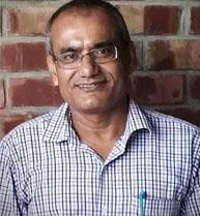
(Pro VC-2), JNU
CSRD/SSS/JNU New Delhi
| Topic- Addressing the Issues and Challenges for Nation Building in the New Millennium: Perspectives of National Education Policy 2020 (NEP 2020) |
Day 1: Orientation and Sensitization Programme on NEP 2020
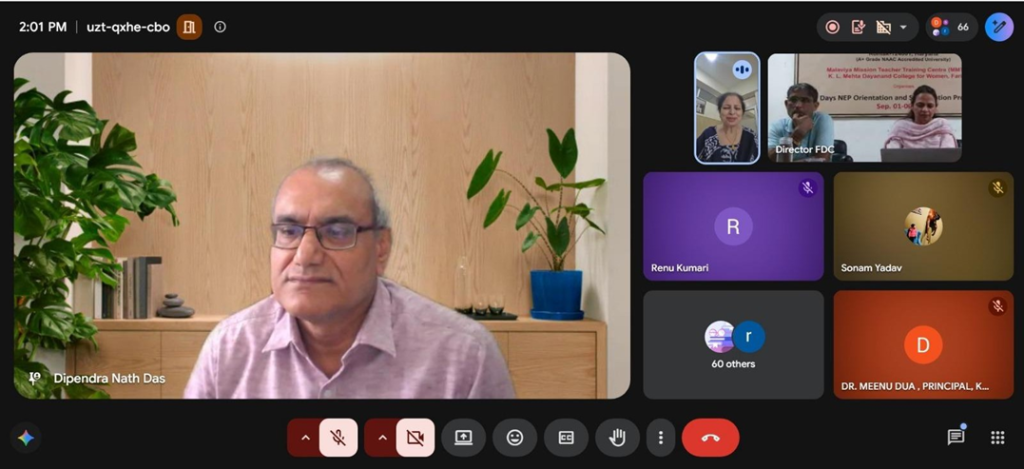
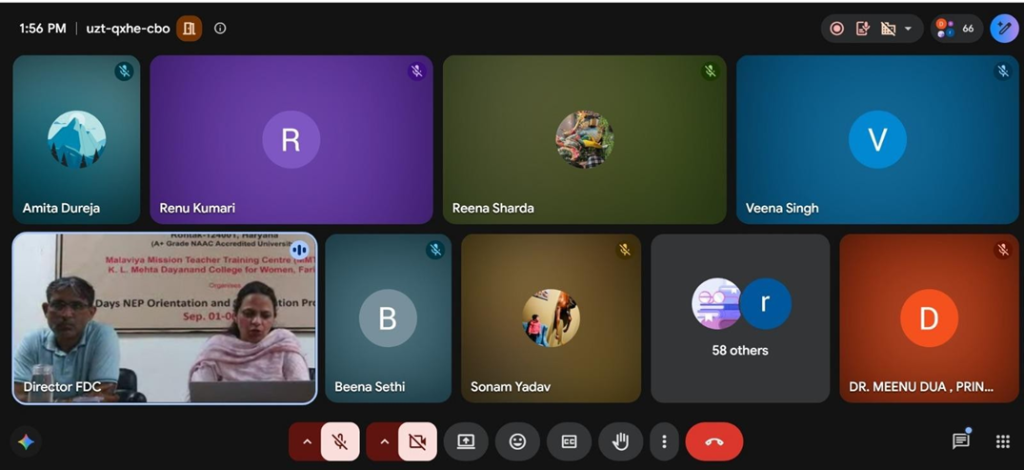
The 8-Day Orientation and Sensitization Programme on the National Education Policy (NEP) 2020 commenced on 1 September 2026, organized by UGC–Malaviya Mission Teacher Training Centre (MMTTC), Maharshi Dayanand University, Rohtak, in collaboration with K.L. Mehta Dayanand College for Women, Faridabad. The programme was conducted in online/offline mode with active participation of 64 participants from various institutions. The inaugural session was formally initiated by the Coordinator, Dr. Beena Sethi, who warmly welcomed the dignitaries, resource person, and participants and highlighted the objectives and significance of the programme. Dr. Meenu Dua, Principal, K.L. Mehta Dayanand College for Women, Faridabad, addressed the participants and emphasized the transformative vision of NEP 2020. She highlighted its focus on making higher education holistic, flexible, multidisciplinary, inclusive, and skill-oriented. The academic sessions were conducted by eminent resource person Prof. Dipendra Nath Das, who elaborated on the salient features of NEP 2020 and its paradigm shift from teacher-centric to learner-centric education. He also discussed challenges related to faculty development, infrastructure, assessment reforms, and effective policy implementation.
The second session focused on the formulation and core objectives of NEP 2020, along with key concepts such as the Academic Bank of Credits (ABC), Multiple Entry and Multiple Exit, multidisciplinary and holistic education, and skill and vocational education.
Both sessions were highly interactive, with participants actively engaging in discussions and Q&A. The day concluded with a Vote of Thanks proposed by Dr. Beena Sethi, marking a successful beginning to the programme.
| Day 2: 02 September, 2026 (02:00 PM – 05:00 PM) |
| Session-I & Session-I I |
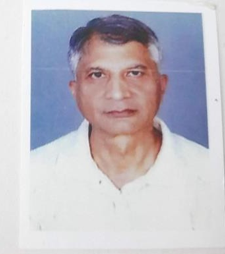
Kurukshetra University Kurukshetra
| Topic: Holistic and Multidisciplinary Education |
Day 2: Orientation and Sensitization Programme on NEP 2020
Day 2 of the 8-Day Orientation and Sensitization Programme on the National Education Policy (NEP) 2020 was conducted on 2 September 2026 in online/offline mode. The programme was organized by UGC–Malaviya Mission Teacher Training Centre (MMTTC), Maharshi Dayanand University, Rohtak, in collaboration with K.L. Mehta Dayanand College for Women, Faridabad. The session commenced with a warm welcome by the Course Coordinator, Dr. Annu Kalra, who welcomed the dignitaries, resource person, and participants. The academic sessions were conducted by the eminent resource person, Prof. S.P. Malhotra, Kurukshetra University. He elaborated on the objectives of higher education and explained the distinction between holistic and multidisciplinary education. Through simple and relatable examples, including the invention of the wheel and the pasteurisation of milk, he illustrated the significance of multidisciplinary approaches and the ways in which different countries have strengthened their higher education systems. Prof. Malhotra further highlighted the importance and benefits of cross-disciplinary and interdisciplinary learning in promoting innovation, creativity, and comprehensive understanding among learners. In the second session, he discussed how higher education institutions can contribute more effectively to community development by fostering students‘ skills through inter-departmental activities, industry linkages, experiential learning, and curriculum innovation. He emphasized the need to move beyond conventional content delivery towards more learner-centred and skill-oriented education. Both sessions were highly informative, engaging, and interactive, with participants actively participating in discussions and exchanging ideas with the resource person. Around 60 participants attended the programme. The day concluded with a formal Vote of Thanks proposed by Dr. Annu Kalra, who expressed gratitude to the resource person, dignitaries, and participants for their valuable contributions.
| Day 3: 03 September, 2026 (02:00 PM – 05:00 PM) |
| Session-I & Session-I I |
School of Environment Sciences, JNU New Delhi
| Topic- Academic Leadership and Management |
Day 3: Orientation and Sensitization Programme on NEP 2020
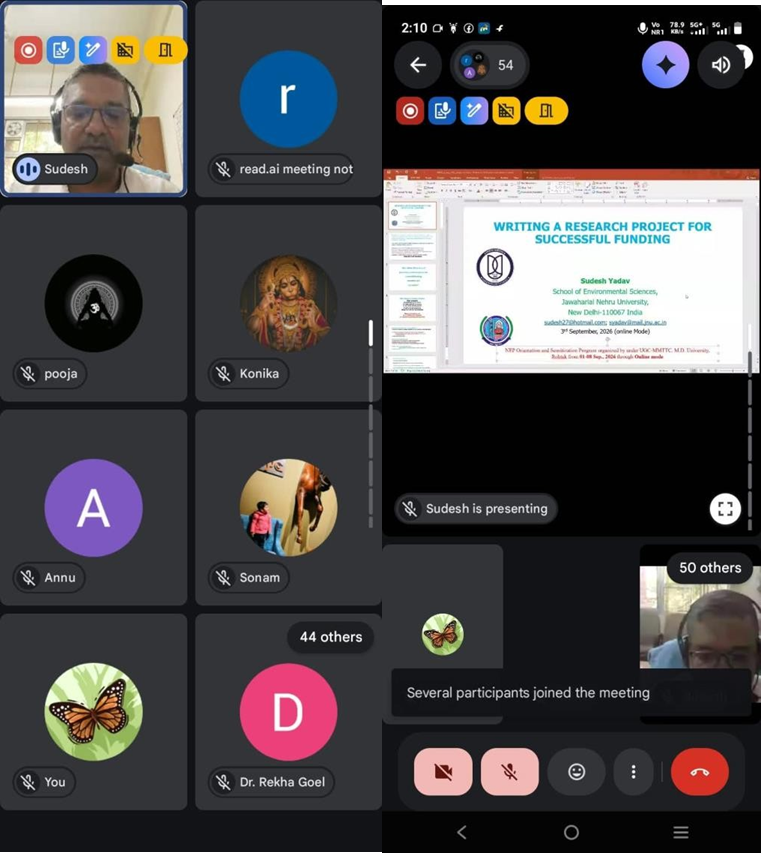
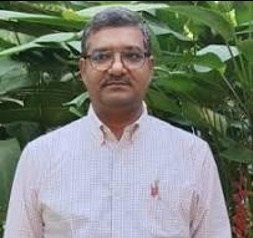
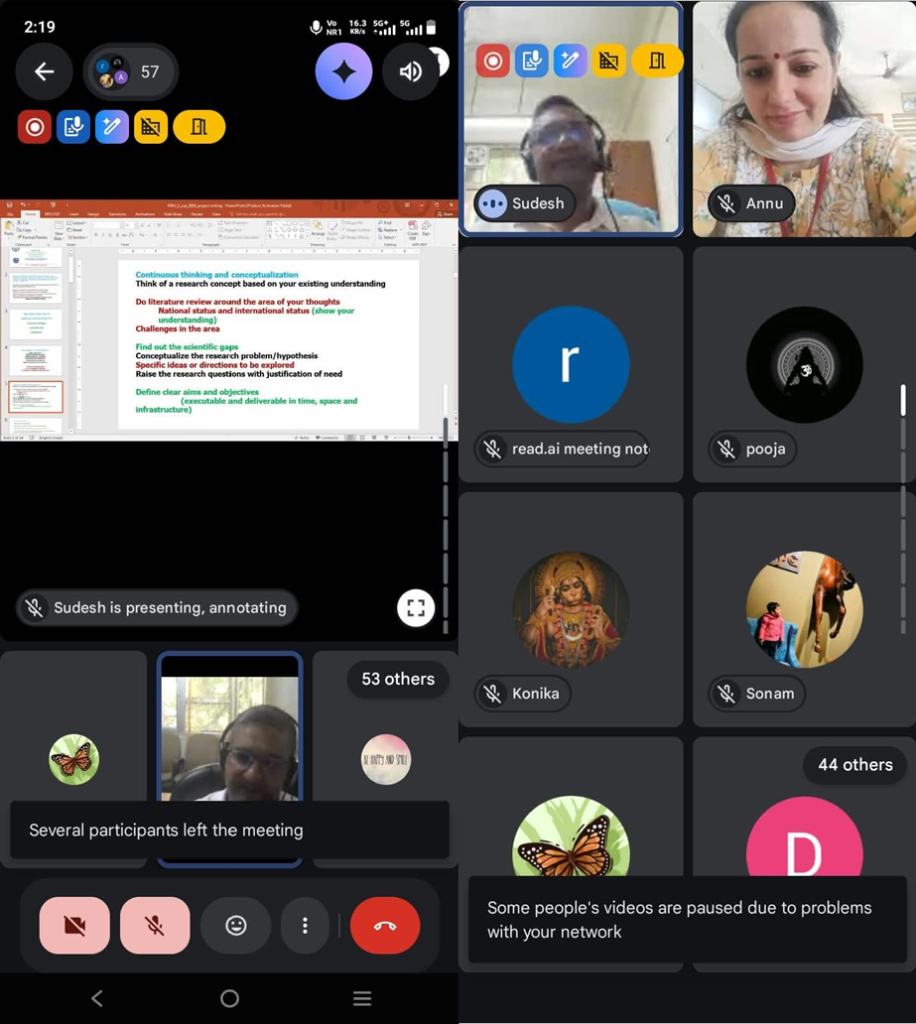
Day 3 of the 8-Day Orientation and Sensitization Programme on the National Education Policy (NEP) 2020 was conducted on 3 September 2026 in online/offline mode. The programme was organized by UGC–Malaviya Mission Teacher Training Centre (MMTTC), Maharshi Dayanand University, Rohtak, in collaboration with K.L. Mehta Dayanand College for Women, Faridabad. The day commenced with a warm welcome by the Course Coordinator, Dr. Annu Kalra, who welcomed the dignitaries, resource person, and participants. The academic sessions were conducted by Prof. Sudesh Yadav, School of Environmental Sciences, Jawaharlal Nehru University, New Delhi. The first session focused on research project writing and successful research funding. Prof. Yadav explained the significance of research grants and highlighted essential aspects of a strong research proposal, including identification of research challenges, clarity of aims and objectives, and preparation of a realistic and evidence-based budget. He also discussed common reasons for rejection of research proposals and offered practical suggestions for improving the prospects of successful funding. The second session focused on multidisciplinary, interdisciplinary, and transdisciplinary approaches to learning and research in higher education. Prof. Yadav emphasized the importance of interdisciplinary research and its relevance to addressing contemporary challenges. He also discussed seven generic principles that provide a framework for evaluating higher education institutions. Both sessions were informative, engaging, and highly interactive, with participants actively participating in discussions and raising queries. Around 60 participants attended the programme. The day concluded with a formal Vote of Thanks proposed by Dr. Annu Kalra, who expressed sincere gratitude to Prof. Sudesh Yadav and all participants for their valuable contributions and active involvement.
Day 4: 04 September, 2026 (02:00 PM – 05:00 PM)

S.D. College Ambala
| Session I & II – Topic: Indian Knowledge System |
Day 4: Orientation and Sensitization Programme on NEP 2020
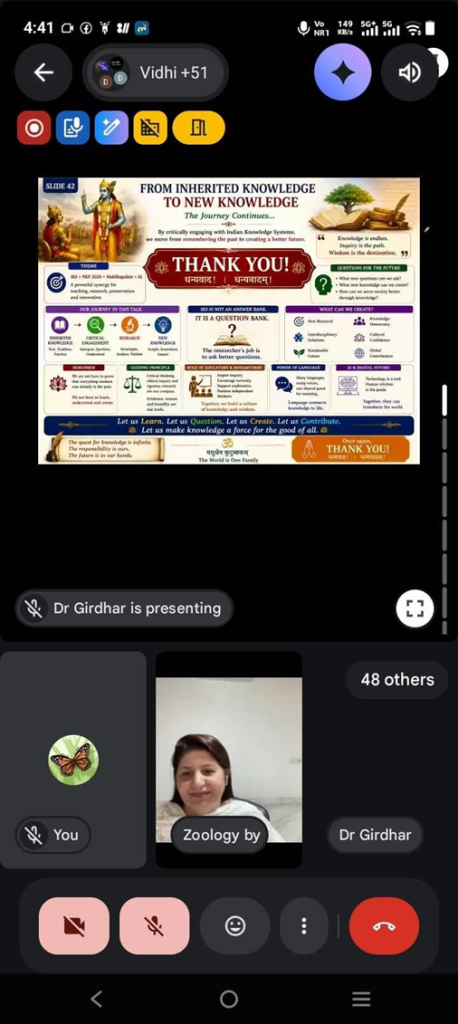
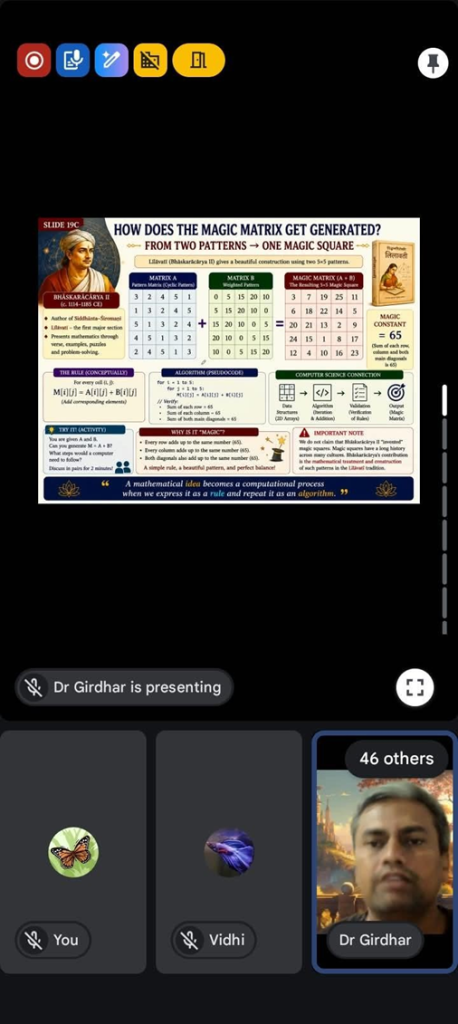
Day 4 of the 8-Day Orientation and Sensitization Programme on the National Education Policy (NEP) 2020 was conducted on 4 September 2026 in online/offline mode. The programme was organized by UGC–Malaviya Mission Teacher Training Centre (MMTTC), Maharshi Dayanand University, Rohtak, in collaboration with K.L. Mehta Dayanand College for Women, Faridabad. The day commenced with a warm welcome by Dr. Shveta Arya, who welcomed the dignitaries, resource person, coordinators, and participating faculty members. The academic sessions were conducted by Dr. Girdhar Gopal, Assistant Professor, Department of Computer Science, Sanatan Dharma College, Ambala Cantt. The sessions focused extensively on Indian Knowledge Systems (IKS) and their relevance to contemporary education and research in accordance with the vision of NEP 2020. The first session explored the significance of IKS and its applications across diverse disciplines, including Environmental Studies, Management and Leadership, Mathematics and Sciences, Literature and Languages, Health and Well-being, and Arts and Aesthetics. The resource person highlighted how traditional Indian knowledge can offer valuable insights and approaches to contemporary challenges. The second session focused on integrating IKS with modern academic disciplines, science, technology, and research. References to the Bhagavad Gita highlighted perspectives on ethics, sustainability, society, language, and holistic well-being. The discussion emphasized that technology can provide tools for advancement, while IKS can contribute values, direction, and purpose. Both sessions were informative, interactive, and thought-provoking. Participants actively engaged in discussions and gained insights into integrating IKS into teaching, learning, and research. The day concluded with a Vote of Thanks proposed by Dr. Shveta Arya, who expressed gratitude to the resource person, dignitaries, coordinators, and participants for their valuable contributions.
Day 5: 05 September, 2026 (02:00 PM – 05:00 PM)
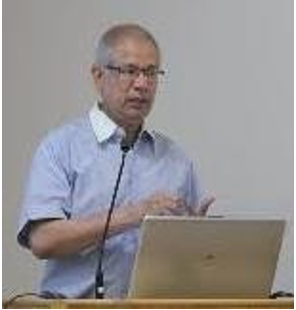
Ambedkar University, Delhi
| Session-I -Topic:- Use of ICT for Effecting Teaching Session-I I -Topic:- ICT Tools for Online Assessment |
Day 5: Orientation and Sensitization Programme on NEP 2020
Day 5 of the 8-Day Orientation and Sensitization Programme on the National Education Policy (NEP) 2020 was conducted on 5 September 2026 in online/offline mode. The programme was organized by Malaviya Mission Teacher Training Centre (MMTTC), Maharshi Dayanand University, Rohtak, in collaboration with
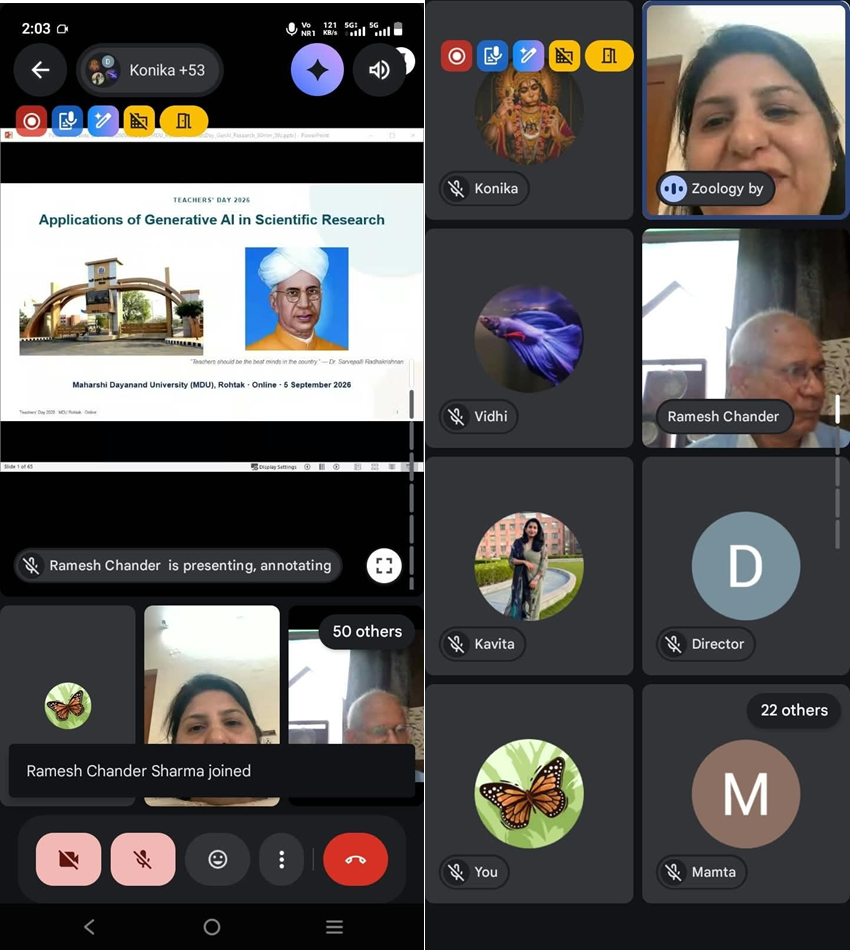
K.L. Mehta Dayanand College for Women, Faridabad. The day commenced with a warm welcome by Dr. Shveta Arya, who welcomed the dignitaries, resource person, coordinators, and participating faculty members. The academic session on “Use of ICT for Effective Teaching” was delivered by Prof. R. C. Sharma, an expert in open, distance, and technology-mediated learning. He provided an insightful overview of Generative Artificial Intelligence (AI) and its emerging role in teaching and research. He explained how AI is transforming various stages of the research process, including literature review, data analysis, coding, and data visualization. A major focus of the session was on AI-powered research tools and their appropriate applications. Participants were introduced to tools such as Elicit, Consensus, Scite, Research Rabbit, and Gemini Notebook, along with resources for journal selection, including Edanz Journal Selector, SCImago Journal & Country Rank, and JANE. Prof. Sharma emphasized the need for careful verification of AI-generated information and advised researchers not to rely on ChatGPT for citations or evidence without independent validation. He also highlighted the importance of maintaining researcher profiles through ORCID and Google Scholar and stressed academic integrity, critical thinking, and responsible AI usage. The session was highly informative, practical, and research-oriented. It equipped participants with valuable knowledge of emerging AI tools and encouraged their responsible use as research assistants. The session concluded with a Vote of Thanks by Dr. Shveta Arya, who expressed gratitude to Prof. R. C. Sharma for his valuable insights and guidance.
Day 6: 06 September, 2026 (02:00 PM – 05:00 PM)
CSS/JNU New Delhi
| Session-I- Topic: Handling Diversity and Creating Inclusive Classrooms | Session-I I – Topic: Academic Leadership and Management |
Day 6: Orientation and Sensitization Programme on NEP 2020
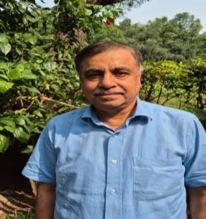
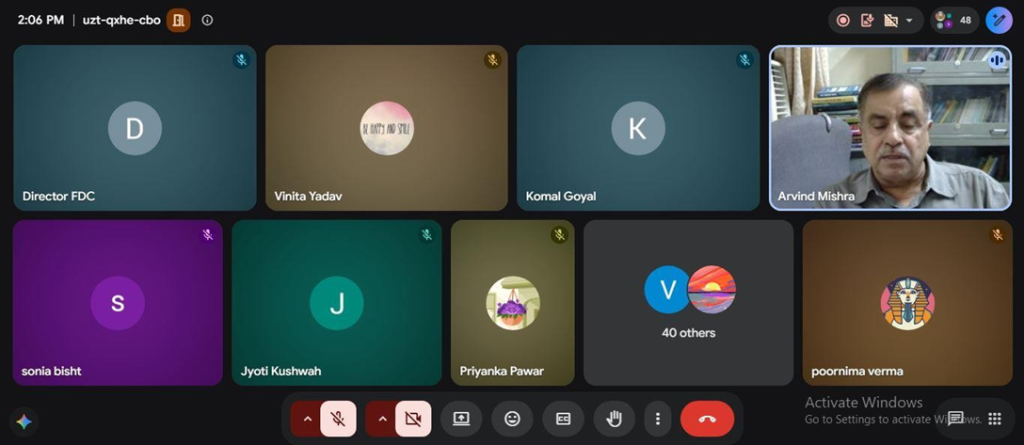
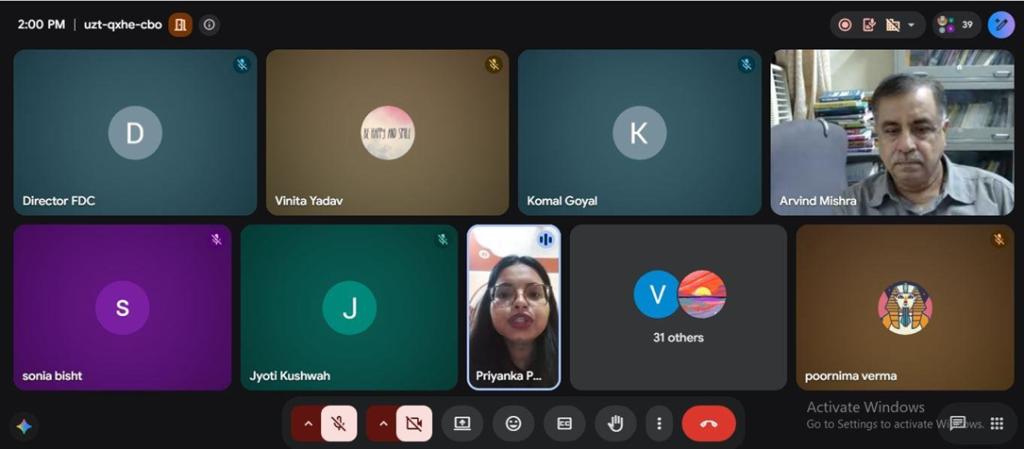
The sixth day of the 8-Day Orientation and Sensitization Programme on National Education Policy (NEP) 2020 was organized on 6 September 2026 in hybrid mode by the Malaviya Mission Teacher Training Centre (UGC-MMTTC), Maharshi Dayanand University, Rohtak, in collaboration with K.L. Mehta Dayanand College for Women, Faridabad. The programme aimed to enhance faculty members‘ understanding of NEP 2020, inclusive education, contemporary pedagogical practices, academic leadership, and institutional management. The programme was conducted under the patronage of Prof. Milap Punia, Vice Chancellor, MDU, with the guidance of Prof. Munish Garg, Director, UGC-MMTTC, and Dr. Madhuri Hooda, Deputy Director and Project Coordinator. The collaborating institution was supported by Dr. Meenu Dua, Officiating Principal, along with the IQAC and NEP coordinating teams. The first session, —Handling Diversity and Creating Inclusive Classrooms,‖ was delivered by Prof. Arvind Kumar Mishra, Professor of Psychology, Jawaharlal Nehru University, New Delhi. He emphasized recognizing learner diversity and creating equitable, inclusive, sensitive, and supportive classrooms. The session highlighted teachers‘ roles in addressing diverse learning needs, encouraging participation, and reducing barriers to learning. The second session focused on —Academic Leadership and Management.‖ Prof. Mishra discussed strategic planning, effective decision-making, teamwork, communication, delegation, innovation, and institutional development. He emphasized that academic leadership involves motivating colleagues and fostering collaboration to achieve institutional goals. Both sessions were informative and interactive, encouraging participants to reflect on their roles as educators, mentors, academic leaders, and contributors to institutional development. The sessions were coordinated by Ms. Priyanka Pawar and concluded with a vote of thanks to the resource person, dignitaries, coordinators and participants.
| Day 7: 07 September, 2026 (02:00 PM – 05:00 PM) |
| Session-I & Session-I I |
Department of Microbiology M.D.U.Rohtak
| Topic- Quality Publication and Research Grants : AI and Ethics | Topic- Impact of Multidisciplinary Research: In Publication & Research Grant |
Day 7: Orientation and Sensitization Programme on NEP 2020
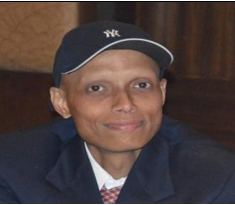
On 7 September 2026, an insightful and enriching academic session was organized by Prof. K. K. Sharma, Department of Microbiology, M.D. University, Rohtak, on “Quality Publication and Research Grants: AI and Ethics” and “Impact of Multidisciplinary Research in Publication & Research Grant.” The session was hosted by Dr. Beena Sethi and attended by approximately 56 enthusiastic participants. Prof. Sharma highlighted the significance of publishing high-quality research in reputed journals while maintaining originality, academic integrity, ethical standards, and responsible use of Artificial Intelligence (AI) in research and academic writing. He explained how AI can support researchers when used responsibly and ethically, while emphasizing the importance of maintaining authenticity and intellectual honesty. The session also provided valuable guidance on preparing effective research proposals, identifying relevant research gaps, selecting appropriate research methodologies, and enhancing the chances of obtaining research grants. Special emphasis was placed on the role of multidisciplinary research in addressing complex academic and societal challenges. The discussion on multidisciplinary research was particularly engaging, demonstrating how collaboration across different disciplines can generate innovative ideas, improve research outcomes, strengthen the quality of publications, and enhance opportunities for securing competitive research funding. The presentation was exceptionally well explained, practical, interactive, and thought-provoking. Prof. Sharma presented complex research concepts in a clear and accessible manner and encouraged participants to adopt innovative, ethical, and impactful approaches to research. Overall, the session was highly informative and inspiring, providing participants with valuable insights into quality publication, research ethics, AI, multidisciplinary collaboration, and research funding opportunities.
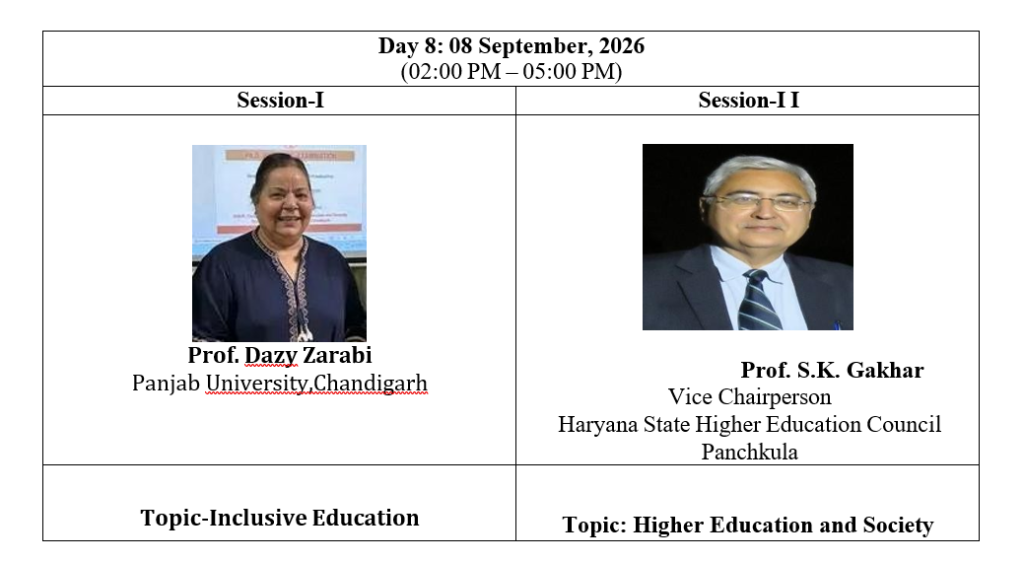
Day 8: Orientation and Sensitization Programme on NEP 2020
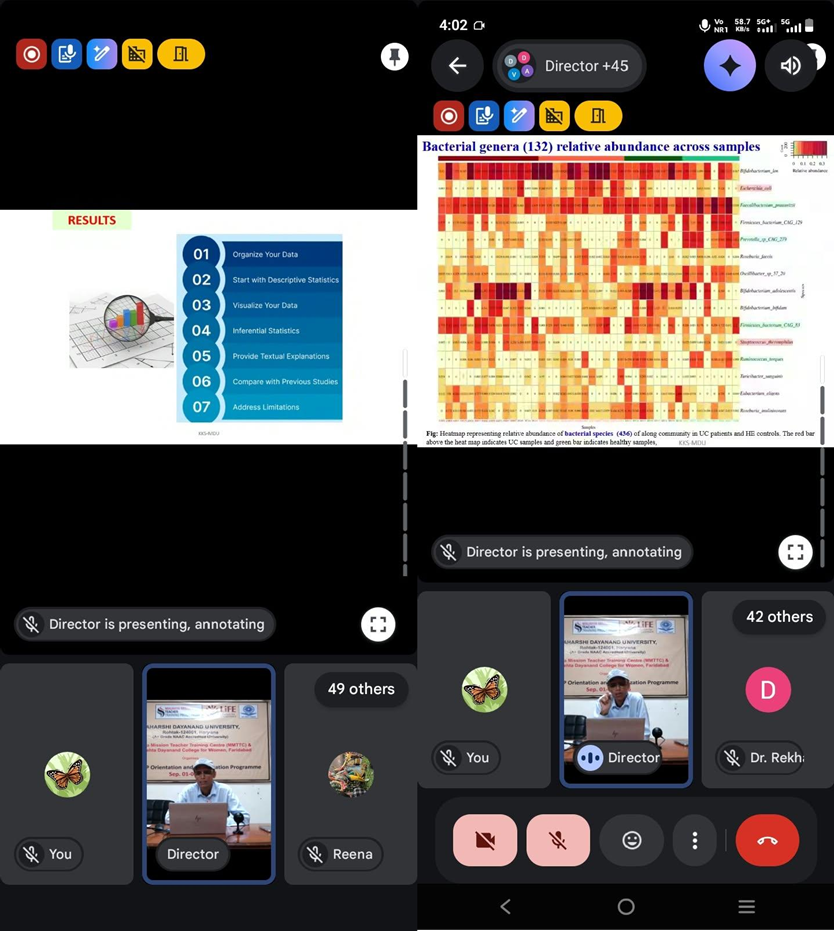
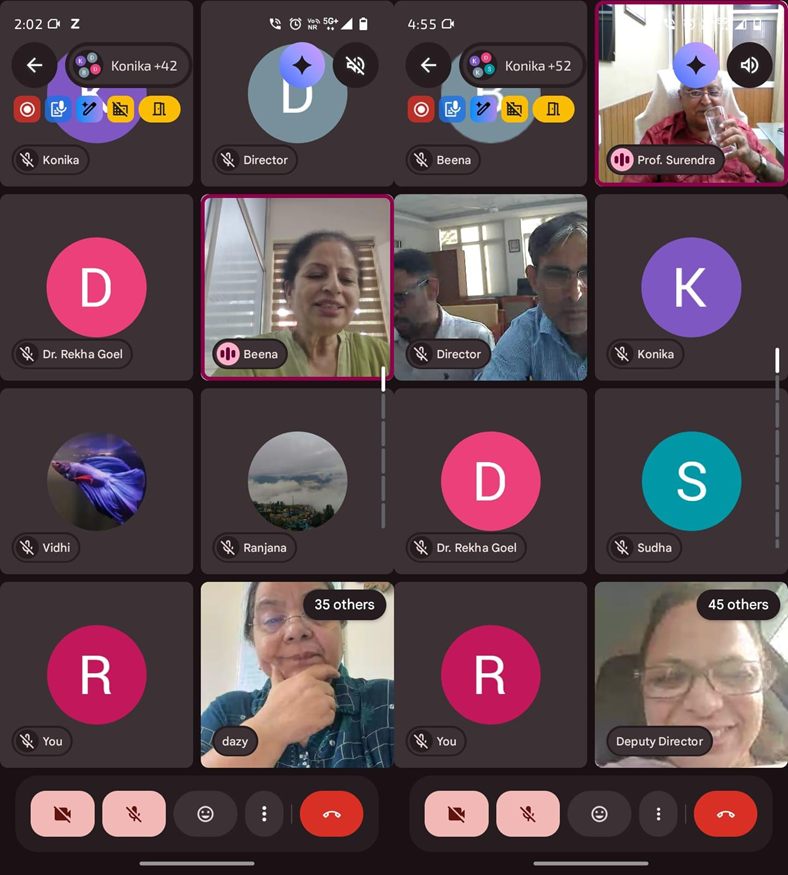
On 8 September 2026, an enriching academic programme was organized with approximately 64 enthusiastic participants on two significant themes: “Inclusive Education” and “Higher Education and Society.” The sessions provided valuable insights into contemporary educational practices and the broader role of higher education in society. The first session was delivered by Prof. Dazy Zarabi, Panjab University, Chandigarh, who explained the concept and significance of inclusive education with remarkable clarity. She emphasized the importance of equal opportunities, accessibility, diversity, empathy, and active participation of every learner in the educational process. Her presentation highlighted the need to create an educational environment where learners from diverse backgrounds can participate and progress equitably. The second session was conducted by Prof. S. K. Gakhar, Vice Chairperson, Haryana State Higher Education Council, Panchkula. He provided an insightful perspective on the role of higher education in shaping society, fostering social responsibility, developing human values, and contributing to national development. His discussion emphasized the importance of socially relevant and value-based education. Both sessions were engaging, thought-provoking, practical, and effectively presented in a simple and accessible manner, keeping participants actively involved throughout. The programme was hosted by Dr. Beena Sethi, whose leadership, coordination, and encouragement contributed significantly to its success. Dr. Meenu Dua, Principal, K. L. Mehta Dayanand College for Women, also provided valuable support to the academic programme. The organizers expressed gratitude to M.D. University, Rohtak, for providing an academic platform and to NEP 2020 for promoting inclusive, equitable, multidisciplinary, and socially relevant higher education. Overall, the sessions were highly appreciated and left participants motivated and inspired.
MEDIA GALLERY